India is a country of incredible diversity, where history, religion, and traditions come together to create a lively and colourful culture. For anyone visiting or simply curious, understanding Indian culture and Hinduism, the religion that shapes much of life in India, can make your experience intense and more meaningful. The Beginners guide to Indian culture and Hinduism will introduce you to the basics of Indian culture, key beliefs and practices in Hinduism. Here I share helpful tips for navigating daily life and festivals with respect and curiosity.
Table of Contents
Indian culture is one of the oldest and most diverse in the world, shaped by thousands of years of history, religion, and regional traditions. It is deeply rooted in values, family, and spirituality.
Family plays a central role in Indian life. Respect for elders, hospitality toward guests, and spiritual practices are highly valued. Daily life often balances material needs with religious and ethical duties, creating a strong sense of community and social responsibility.
India’s diversity is remarkable. There are over 22 official languages, hundreds of regional dialects, and a variety of religious and cultural practices. Clothing, cuisine, and lifestyles differ widely across regions, reflecting local history, climate, and traditions. From the colourful saris of Rajasthan to the simple dhotis of Kerala, Indian attire reflects both identity and heritage. Similarly, food varies from rich curries in the north to rice-based dishes in the south.
India celebrates countless festivals, many rooted in religion, mythology, or seasonal cycles. Diwali is the festival of lights and celebrates the victory of good over evil. Holi is the festival of colours and marks the arrival of spring and joy. Other festivals, like Navratri, Eid, and Christmas, are also widely celebrated, reflecting the country’s multicultural and multi-religious character. Festivals are often marked by rituals, family gatherings, music, dance, and traditional foods.
The caste system in India is, from a Western perspective, a remarkable and complex social phenomenon. It divides society into hierarchical groups, a structure that dates back thousands of years and has changed over time under the influence of ruling elites. Ancient Sanskrit texts, such as the Rig Veda, describe four main groups, or varnas, which were believed to reflect different aspects of the creator god Brahma.
At the top are the Brahmins, the priestly caste, representing the mouth of Brahma. Traditionally responsible for teaching, performing religious rituals, and maintaining sacred knowledge. They make up about 5% of India’s population and can often be recognized by a sacred thread worn over the shoulder. The Kshatriyas, or warriors, symbolize Brahma’s arms and historically held roles as rulers and soldiers. The Vaishyas, representing Brahma’s hips, are merchants, traders, and farmers, while the Shudras, symbolizing Brahma’s feet, are the labouring class, performing essential work across society.
Beyond these four varnas exists a fifth group, the Dalits, historically referred to as “untouchables.” Dalits were considered outside the varna system, performing work deemed impure, such as leatherworking, butchery, or laundry. Traditional beliefs said that contact with Dalits could spiritually contaminate members of higher castes, necessitating ritual purification afterward. Today, Dalits represent roughly 16% of India’s population.
Mahatma Gandhi supported the rights of the Dalits. He called them Harijan, meaning “children of God.” Gandhi worked to eliminate discrimination and founded the non-profit Harijan Sevak Sangh. He promoted Dalits’ access to schools, water, temples, and other public spaces. His efforts influenced Indian law, which now prohibits caste-based discrimination.
Over centuries, the caste system has grown more complex. In addition to the four varnas, there are thousands of jatis, or subcastes. They define social groups more specifically. Membership in a jati is inherited. The jati determines who they can marry, the occupation one can pursue, and social customs surrounding birth, marriage, and death. Jobs are traditionally linked to caste: for example, Brahmins avoid occupations considered impure, such as handling dead animals, and instead work with food, teach, or sell water.
Despite legal protections, the caste system’s influence persists. Lower-caste or Dalit individuals in government jobs sometimes face discrimination or social pressure. Subtle social hierarchies remain in private life. For instance, domestic workers may avoid certain tasks, reflecting traditional caste boundaries. Yet there are also unexpected outcomes: the system can create employment opportunities, as higher-caste households often hire others to perform jobs considered inappropriate for certain workers.
Today, India continues to wrestle with the legacy of the caste system. While urbanization, education, and legal reforms have weakened its rigid social rules, caste identity still shapes social interactions, marriage practices, and economic opportunities. This highlights both the resilience and the challenges of this ancient social structure.
Hinduism is the largest religion in India, with about 83% of the population identifying as Hindu. Technically, Hinduism is more than a religion. It is a dharma, a way of life that guides how people live, think, and interact with the world. Hinduism has its roots in the ancient religions of the Indus Valley Civilization (3300–1900 BCE) and was influenced by Aryan and Dravidian traditions. Around 1000 BCE, the Vedas, religious texts written in Sanskrit, became the foundation of Hindu beliefs. Among these, the Rig Veda is considered the most important. Together, the Vedas form the framework of Hindu philosophy and practice.
Hinduism has an extensive array with hundreds of deities, or devas, worshipped across India. To make it easier to understand, these gods can be seen as manifestations of three main deities: Brahma, Vishnu, andShiva. These three are expressions of Brahman, the supreme, impersonal spirit that is present in all life. The ultimate goal in Hinduism is to realize that every soul is identical to Brahman, connecting all living beings.
Which god a Hindu chooses to worship is often a personal, regional, or family preference. Gods are represented in art, architecture, stories, and rituals, each with its own symbols, vehicles, and special powers.
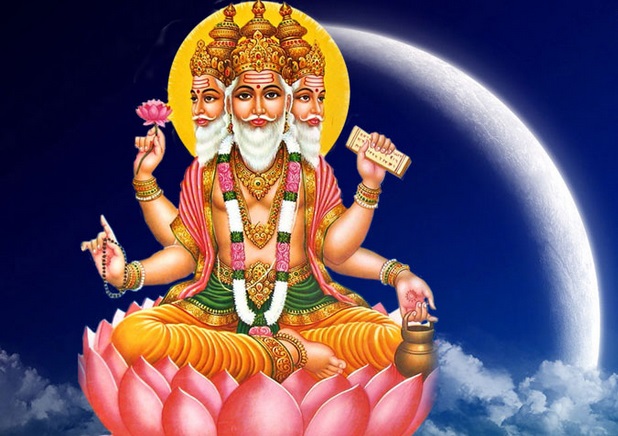
Brahma is the creator of the universe. He has four heads and four arms and is believed to have revealed the four Vedas. Brahma is often associated with his daughter, Sarasvati, the goddess of knowledge and learning. His symbol is the lotus flower, and his vehicle is a goose. Brahma temples are rare in India. The most famous is in Pushkar, Rajasthan.
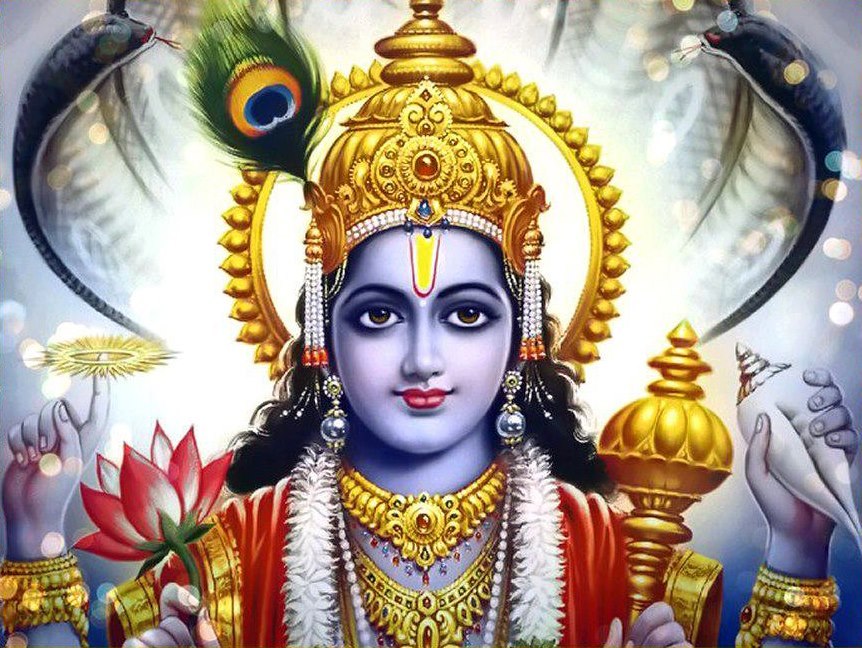
Vishnu is the protector and preserver of life and the universe. He is often shown seated on a coiled snake and appears on Earth in various forms, including a fish, a dwarf, a wild boar, Rama, Krishna, and even Buddha. Vishnu’s wife is Lakshmi, the goddess of wealth and prosperity. His symbol is a conch shell, and he rides Garuda, a mythical eagle.
One of Vishnu’s most popular forms is Krishna, depicted as a playful, flute-playing boy who entertains himself with the gopis, or cowherd girls. Krishna is often shown with blue skin. It is a colour legend says he received as a baby after drinking poisoned milk given by a demon.
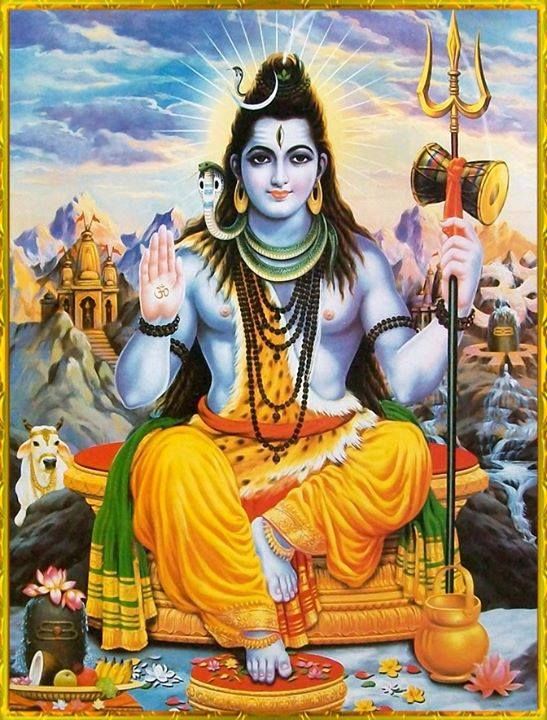
Shiva is both the creator and destroyer, embodying the cycle of life. He has five faces, three eyes, and four arms. In southern India, Shiva is worshipped as Nataraja, the Lord of Dance, while in other forms, he is Pashupati, protector of animals.
Shiva’s consort is Shakti, the goddess of energy and life, who has many forms:
Shiva’s symbols include the trident (trishula) and the lingam, a representation of divine energy and fertility. His vehicle is the bull Nandi. Some followers of Shiva, known as sadhus, live at cremation sites. These ascetics cover themselves in ash, wear dreadlocks, practice fasting, and dedicate their lives to spiritual discipline.
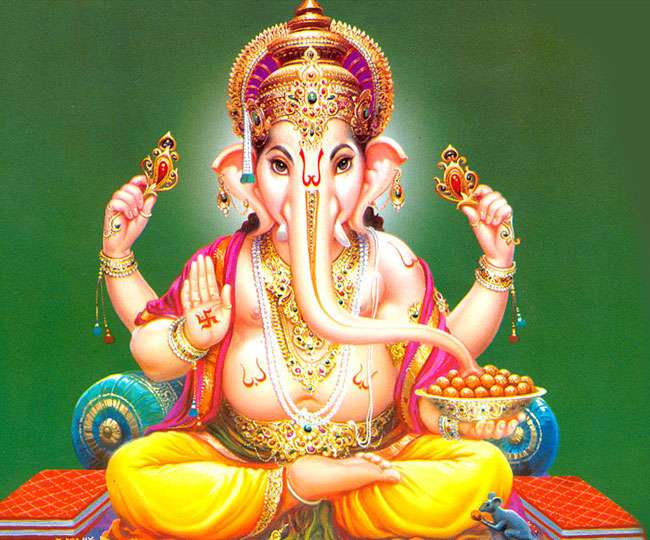
Ganesh is the elephant-headed god, is one of the most beloved Hindu deities. He is the son of Shiva and Parvati and is worshipped as the god of wisdom, prosperity, and success. People often pray to Ganesh before starting new projects, exams, or even buying lottery tickets.
Ganesh’s elephant head has a unique story: when Shiva accidentally decapitated his son, he promised to replace his head with the first animal he found, which happened to be an elephant. Ganesh’s vehicle is a mouse, symbolizing humility and the ability to overcome obstacles.
Hinduism is incredibly diverse, so much so that it is often described as a family of religions rather than a single religion. It includes a wide range of practices, rituals, philosophies, and sacred texts. There is no single founder or unified system, and beliefs can vary greatly by region, community, or family tradition. Some temples may even restrict entry to certain castes, reflecting local customs and traditions.
Classical Hindu philosophy identifies four main goals of human life, known as Purusharthas: Dharma, Artha, Kama, and Moksha.
Dharma is considered the most important goal. It refers to righteousness, ethics, and living in harmony with the natural order (called rta). Dharma includes duties, laws, moral responsibilities, and virtues. By following dharma, individuals respect and protect others, helping to maintain balance and harmony in the world.
Artha represents wealth, prosperity, and livelihood. It emphasizes the importance of securing the resources needed for a stable and successful life. Pursuing artha allows individuals to provide for themselves and their families responsibly.
Kama is the pursuit of pleasure, love, and desire. It includes enjoyment of the senses, affection, and emotional connection. Hinduism considers kama a natural and healthy part of life, but it should be balanced with dharma and other life goals.
Moksha is the ultimate goal of life: liberation from suffering, sorrow, and the cycle of birth and rebirth (samsara). Achieving moksha means breaking free from worldly attachments and realizing the true nature of the soul. Different schools of Hinduism interpret moksha in slightly different ways, but all see it as the highest aim.
A central concept in Hinduism is samsara, the continuous cycle of birth, life, death, and rebirth. How a person is reborn depends on karma, the moral consequences of their actions. Positive deeds can lead to a higher social position or better circumstances in the next life. Negative actions can result in being reborn in a lower status, or even as an animal. This system encourages ethical living and personal responsibility throughout life.
Indians are generally warm, friendly, and tolerant people. With a little common sense, politeness, and a smile, you can enjoy your time and avoid awkward situations. Here are some helpful tips to make your visit smoother and more respectful.
Visiting India or exploring Hindu culture for the first time can be an educational experience, and showing cultural awareness helps you connect more deeply with local people.
When entering temples or private homes, it’s customary to remove your shoes as a sign of respect. Dress modestly: covering shoulders and knees is generally appreciated. In temples, follow local practices such as keeping silence in prayer areas, walking clockwise around shrines, and avoiding photography where it’s restricted.
India’s cultural landscape is diverse, so customs can vary by region. It’s helpful to approach interactions with patience, curiosity, and openness. Avoid public displays of affection, use your right hand for giving or receiving items, and be mindful of personal space and social etiquette, especially around elders.
Simple greetings can go a long way. Saying “Namaste” with palms pressed together is a warm, respectful way to greet people. Learning a few basic phrases in Hindi or the local language, such as “thank you,” “please,” or “hello”, shows appreciation for the culture and often leads to friendlier interactions.
India is a land of incredible diversity, with history, culture, and natural beauty. From the ancient temples and rock-cut wonders of Hampi to the lively streets and historic landmarks of New Delhi. Every destination tells a unique story. Explore the sun-soaked beaches and nightlife of Goa, marvel at the timeless beauty of the Taj Mahal, and witness spiritual rituals along the sacred ghats of Varanasi. The romantic palaces and lakes of Udaipur, the majestic forts and colourful markets of Jaipur, and countless other cities and regions across the country make sure that every journey in India is unforgettable.
Lecce surprised me. This first-person guide covers the highlights, the food, the day trips and…
Discover Brindisi, Puglia's hidden port city. Explore top sights, best beaches, local food, day trips…
Discover Bari, Italy with this complete travel guide. Explore Bari Vecchia, top attractions, local food,…
Explore Croatia in 2 weeks: Dubrovnik, Hvar, Split, Zadar & Plitvice. Top sights, stunning Adriatic…
Discover Rajasthan photography tips, the best photo spots, and how to create stunning prints. Capture…
Discover the best spots to photograph Hampi’s ancient ruins, get practical tips for capturing stunning…

View Comments
Hinduism is so peaceful, and believe in non-violence. There are total 33 Crores goddess in Hindu Dharma. VERY VERY NICE ARTICLE...Thank You so much for Sharing...👌🙏🙏
Hola,
I'm so glad you liked it. I spend a lot of time writing the article. I have learned so much about Hinduism. I know there are many other Gods but as non-Hindu I am still a bit confused about that. That is why I have listed 5 well-known Gods. Good to hear you appreciate it. Thank you for this.
Adriana
Wow such an overwhelming post, amazing photos..
I'm doing yoga for year so I'm familiar with the traditions..
Hola,
I practice yoga as well. And I've been to India multiple times. I liked writing the article and learned much about Hinduism and the caste system.
Good to hear you appreciate the article.
Adriana