

Plitvice Lakes National Park is one of Croatia’s most breathtaking natural wonders. The park is famous for its cascading waterfalls, crystal-clear lakes, and forests. A visit to this UNESCO World Heritage siteis a perfect combination of hiking, photography, and nature immersion. Whether you are planning a day trip from Zagreb or Zadar, a multi-day stay to explore the trails at a relaxed pace, or looking for the best accommodations nearby. This travel guide will provide you with the essential tips, highlights, and practical advice to make your visit unforgettable.

Table of Contents
History of Plitvice Lakes
The Plitvice Lakes area has been inhabited since prehistoric times. Archaeological finds show evidence of Illyrian tribes, followed by Roman presence, mainly along nearby trade and military routes. The lakes themselves, however, remained relatively untouched due to their dense forests, wetlands, and difficult terrain.
During the Middle Ages, the region was situated along shifting borders between kingdoms and empires. It was sparsely populated, used primarily for rural farming, woodcutting, and hunting. Because of its strategic position, the wider area became part of the Croatian Military Frontier under the Habsburg Empire in the 16th century. The region was used as a buffer zone against Ottoman expansion. This militarized border limited large-scale settlement, which indirectly helped preserve the natural landscape.
Formation of the Lakes: a living geological history
What makes Plitvice historically unique is that its lakes are still forming today. Over thousands of years, mineral-rich water deposited travertine (tufa) barriers created by a combination of limestone, moss, algae, and bacteria. These natural dams gradually formed a cascading system of lakes and waterfalls.
This dynamic process means Plitvice is not a “frozen” landscape but an changing ecosystem. This is something that later became central to its scientific and conservation value.
19th – 20th century: from wilderness to protected area
In the 19th century, scientists and naturalists began documenting the area’s unusual hydrology and biodiversity. Interest in conservation grew, and local initiatives aimed to protect the lakes from logging and uncontrolled exploitation.
Plitvice was officially declared a national park in 1949. It is the oldest national park in Southeast Europe. This designation marked a turning point, shifting the area from rural use to environmental protection and tourism.
Plitvice and modern Croatian history
Plitvice Lakes is a significant place in modern Croatian history. In March 1991, the area was the site of the Plitvice Lakes incident. It is often referred to as the first armed conflict of the Croatian War of Independence. The event led to the first fatality of the war and symbolical marking of the beginning of Croatia’s path toward independence. During the conflict, the park suffered damage and was closed to visitors for several years. After the war, extensive restoration work was carried out, and tourism gradually returned.
UNESCO World Heritage Status
In 1979, Plitvice Lakes National Park was added to the UNESCO World Heritage List. It is now recognized for its exceptional natural beauty and ongoing travertine formation. This status strengthened international protection efforts and positioned Plitvice as one of Europe’s most important natural heritage sites.
Today, Plitvice Lakes represent a balance between strict conservation and sustainable tourism. Visitor numbers are regulated, walking paths are carefully designed, and scientific monitoring continues to make sure the lakes’ fragile ecosystem remains intact.
The history of Plitvice Lakes is therefore not only about the past. It is an ongoing story of nature, protection, and cultural significance. The park is shaped as much by water and stone as by human history.

Key highlights of the Plitvice Lakes
Cascading Lakes and waterfalls
The main highlight of Plitvice Lakes is its series of 16 terraced lakes, connected by countless waterfalls and cascades. The lakes are divided into the Upper Lakes and Lower Lakes, each with a distinct character. The Upper Lakes are wider and surrounded by dense forest, while the Lower Lakes cut dramatically through a limestone canyon with steep cliffs.
Veliki Slap (The Great Waterfall)
At 78 meters, Veliki Slap is the tallest waterfall in Croatia and one of the park’s most photographed sights. Supplied by the Plitvica River, the waterfall changes dramatically with the seasons. From powerful in spring, lighter and misty in summer, and sometimes frozen in winter.
Ever-changing water colours
The lakes are famous for their vivid colours, going from emerald green and turquoise to deep blue and grey. These colours shift depending on sunlight, mineral content, water depth, and microorganisms, meaning the scenery never looks exactly the same twice.
Wooden walkways over the water
Plitvice’s wooden footpaths and boardwalks allow visitors to walk directly above the lakes and streams. These paths follow the natural flow of the water and provide close-up views of waterfalls, fish, and underwater plant life without disturbing the ecosystem.
Living geological phenomenon
Unlike many landscapes shaped only in the past, Plitvice is a living natural system. The travertine barriers that form the lakes are still growing today, slowly reshaping waterfalls and creating new cascades. This ongoing process is one of the reasons the park holds UNESCO World Heritage status.
Wildlife and forests
The park is surrounded by ancient beech and fir forests and is home to diverse wildlife, including deer, wolves, lynx, brown bears, and more than 160 bird species. While large animals are rarely seen, their presence highlights the park’s ecological importance.
Seasonal beauty all year round
Plitvice Lakes look completely different in each season. Spring brings powerful waterfalls, summer gives green landscape and autumn adds warm forest colours. Winter changes the park into a frozen landscape of ice and snow, often with far fewer visitors.
Boat and Panoramic Train Rides
Electric boats across Lake Kozjak and panoramic trains between key areas make it easier to explore the park while enjoying scenic viewpoints along the way. These low-impact transport options help preserve the environment while improving accessibility.


How to buy tickets for the Plitvice Lakes
Visiting Plitvice Lakes National Park requires a ticket, and there are two main ways to buy one: online or at the park.
Buy tickets online (recommended)
The easiest way is to purchase tickets through the park’s official online website. This allows you to:
- Choose your visit date
- Select a time slot for entry
- Pick your entrance point (Entrance 1 or Entrance 2)
- Select the ticket type, such as adult, student, child, 1-day, or 2-day
Online booking is highly recommended, especially during the busy summer months, as visitor numbers are limited and tickets often sell out in advance. After booking, you will receive a digital ticket, which can be saved on your phone or printed.
Buy tickets at the park
Tickets can also be purchased at the entrance ticket offices, but this is less reliable. Popular days and time slots can sell out, and arriving without a reservation may mean waiting or missing your preferred entry time. Payment is usually accepted in both cash and credit card.
Special tickets and groups
- Groups of 15 or more generally need to book in advance.
- Students and visitors with disabilities may be eligible for discounted rates and should have proof of eligibility.
Ticket types and timing
Ticket prices vary depending on the season and time of day, with peak summer prices being the highest. Options include 1-day tickets for a standard visit and 2-day tickets for a slower, more relaxed exploration.
Tips for Visitors
- Book well in advance during summer.
- Arrive on time for your chosen slot; late arrivals may have restricted access.
- Keep a printed or offline copy of your ticket, as mobile reception can be limited near the park entrances.

Daytrips to the Plitvice Lakes
Plitvice Lakes is one of Croatia’s most famous natural attractions, and it’s possible to visit on a day trip from several nearby towns and cities. The best starting point depends on your location and travel style.
Zagreb
Zagreb is the capital of Croatia. This is the most popular base for a day trip to Plitvice. The park is about 2 to 2.5 hours by car from the city. Options include:
- Self-drive: Renting a car gives flexibility to arrive early and explore at your own pace.
- Guided tours: Many operators have full-day trips from Zagreb, including park entrance and transportation.
Zadar
The coastal city of Zadar is about 1.5 to 2 hours by car from Plitvice. This makes it a convenient option if you are staying on the Dalmatian coast. Day trips often combine a morning drive with several hours of hiking in the park.
Split
From Split, Plitvice is farther away and roughly 3.5 to 4 hours by car. A day trip from Split is possible but requires an early start. Many travellers opt to stay overnight near the park to enjoy the lakes without rushing.
Rijeka
Rijeka is about 2.5 to 3 hours from Plitvice. It’s another option for travellers on the northern Adriatic coast, combining coastal sightseeing with a nature excursion.
Tips for day trips
- Start early to maximize your time in the park and avoid crowds.
- Bring comfortable walking shoes, water, and snacks. There are paths, but some hikes can take several hours.
- Consider guided tours if you want detailed information about the park’s history, geology, and wildlife.
- If travelling from farther cities like Split, think about overnight stays nearby to enjoy the park without time pressure.

Where to stay around the Plitvice Lakes
Finding the perfect place to stay near Plitvice Lakes National Park can make your visit even more memorable. Whether you prefer cozy guesthouses, family-friendly resorts, or charming boutique accommodations. The area has options to suit every traveller. Many properties are located just a short drive from the park entrances, allowing for early morning hikes and peaceful evenings surrounded by nature. From modern resorts with full amenities to rustic lodges that mix with the forest. Accommodations near Plitvice Lakes give comfort, convenience, and a chance to relax after exploring one of Croatia’s most breathtaking natural landscapes.
Holiday Park Plitvice Paradise
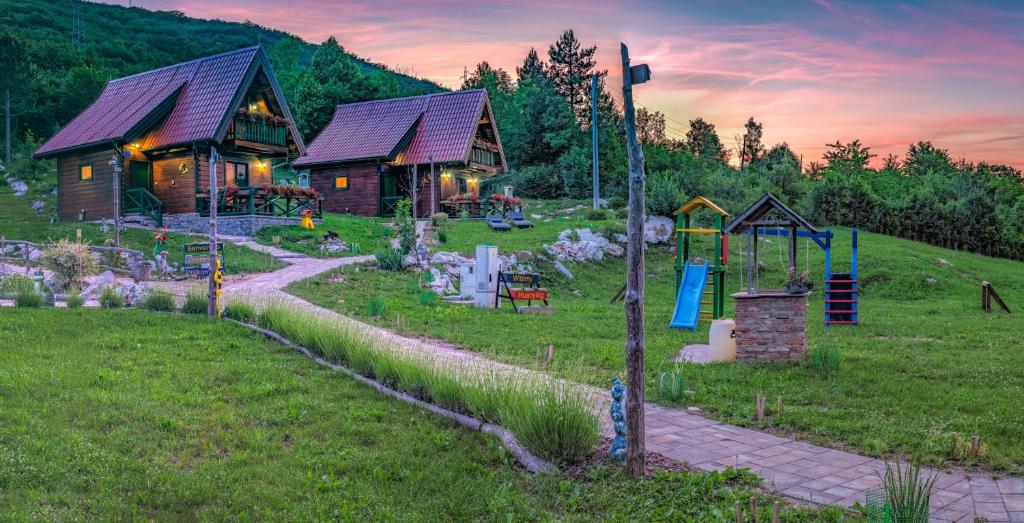
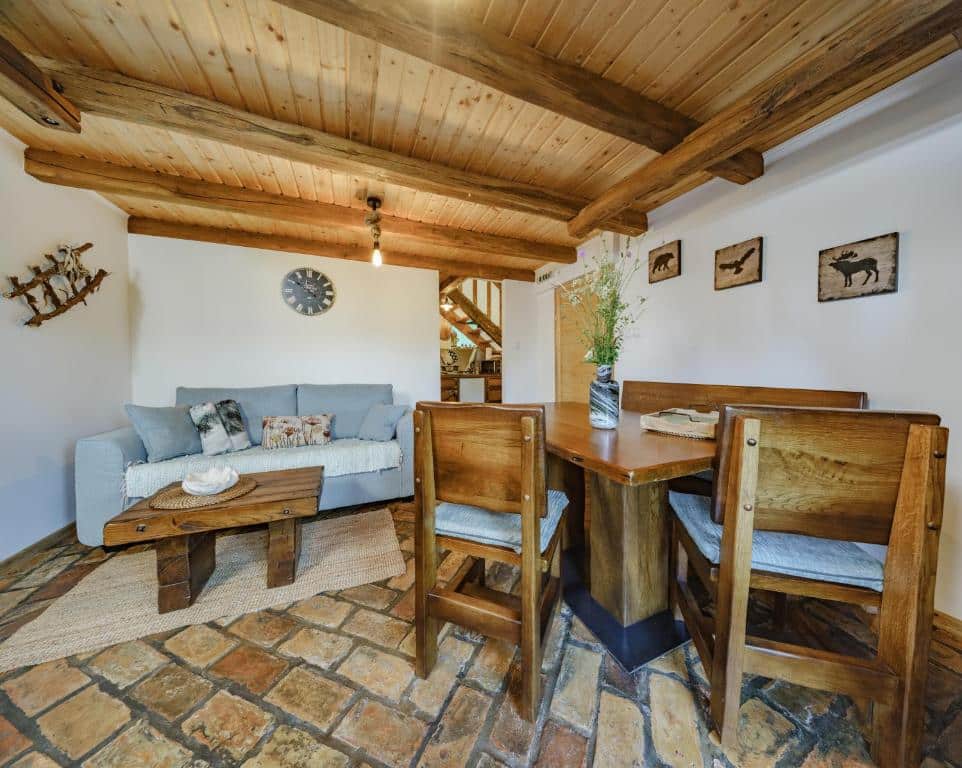
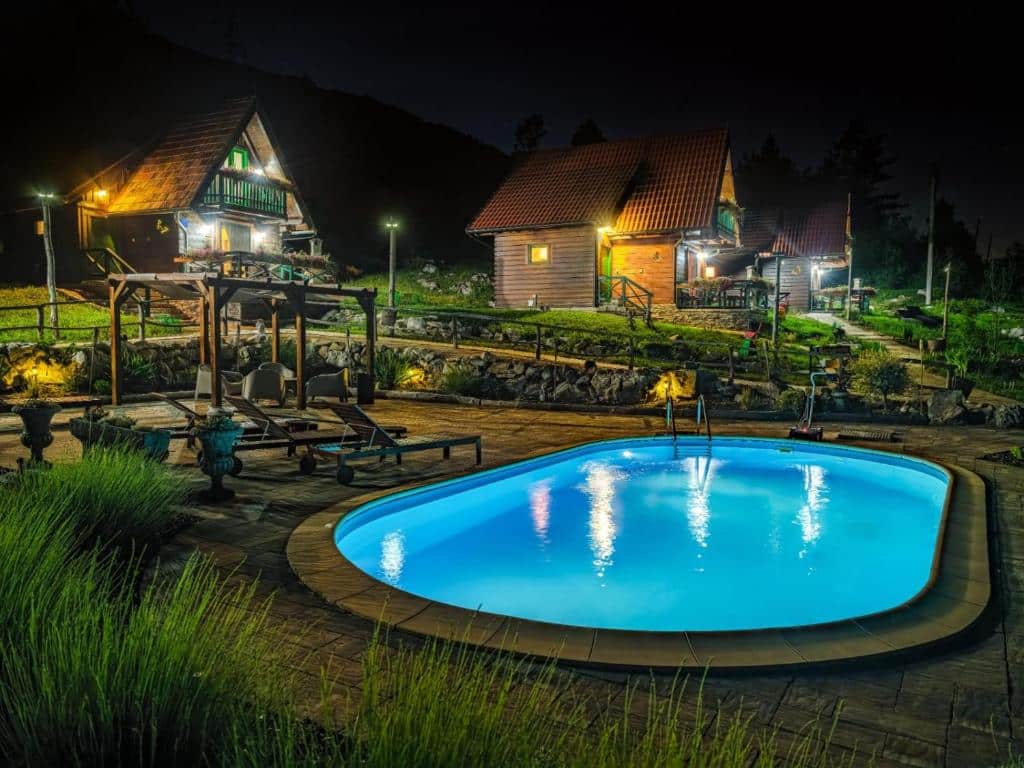
Holiday Park Plitvice Paradise is a highly regarded accommodation option near Plitvice Lakes National Park that mixes comfort, natural surroundings, and convenience for travellers exploring the area. Guests consistently praise the property for its excellent location a short drive from the park. The holiday park has spacious bungalow‑style units with private bathrooms, fully equipped kitchens, and outdoor patios or balconies overlooking the garden or pool area. They have on‑site amenities such as a swimming pool with views, hot tub, sun terrace, garden, and outdoor play area. Families value the outdoor space and play equipment, while couples and groups appreciate the peaceful atmosphere and friendly, attentive service.
Etno Garden Exclusive
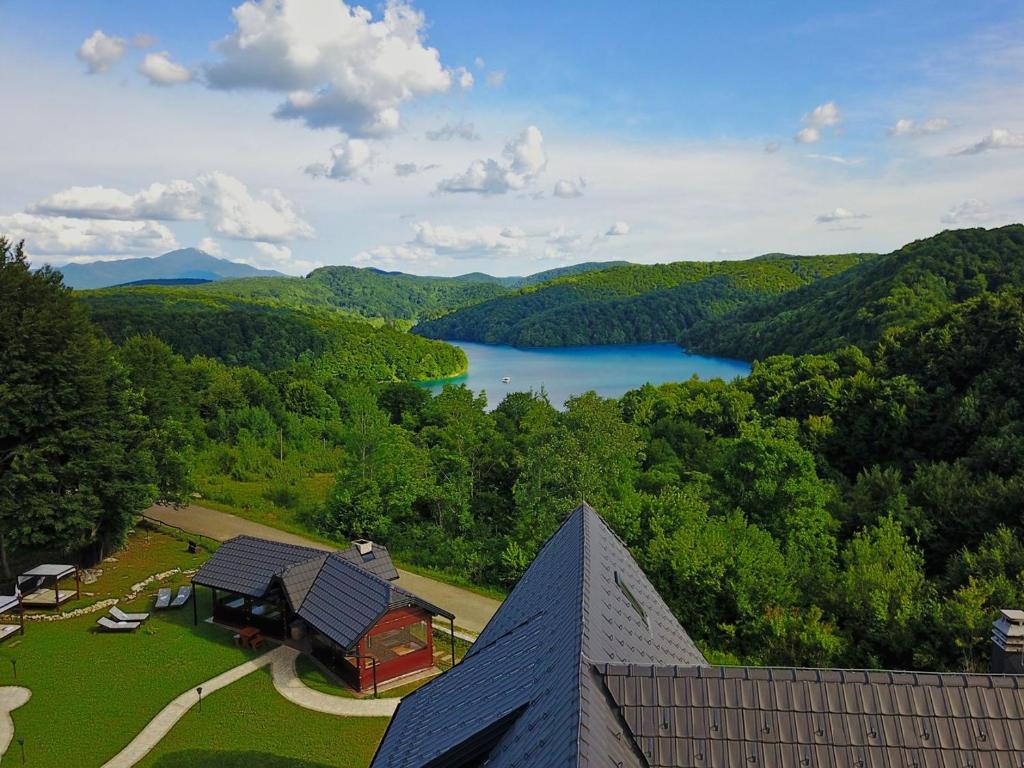
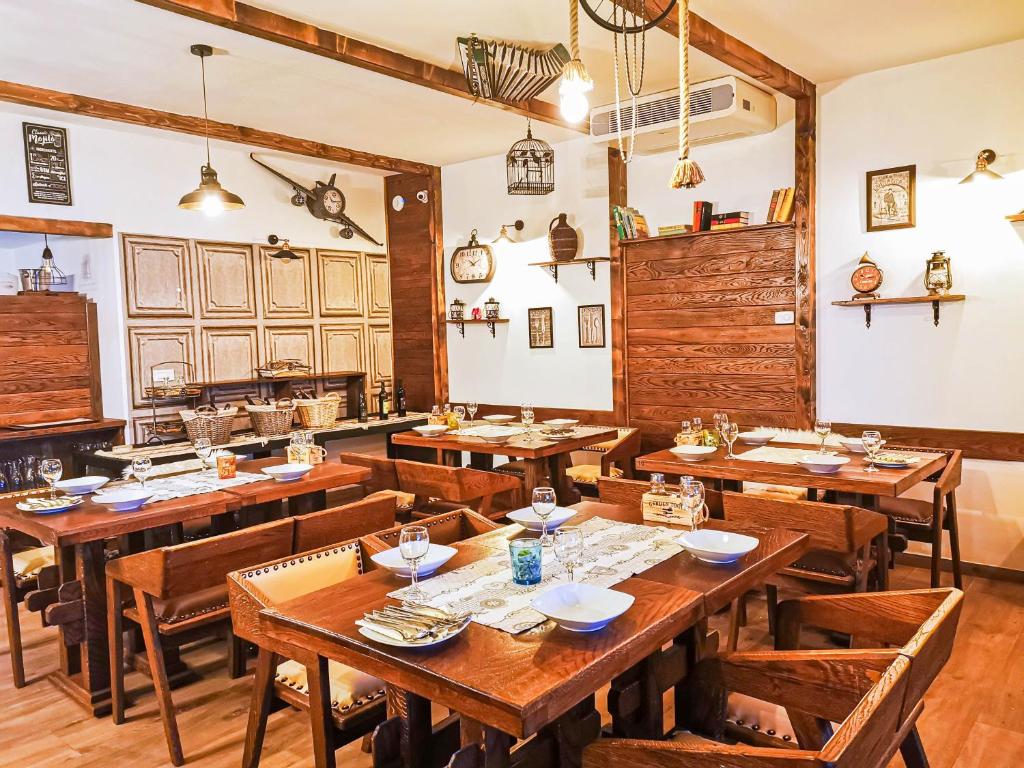
Etno Garden Exclusive is a popular and comfortable place to stay near Plitvice Lakes National Park. Visitors often highlight the spacious, clean rooms that combine modern comfort with traditional touches, complete with air conditioning, satellite TV, and well‑appointed bathrooms. The on‑site restaurant and outdoor dining terrace receive praise for serving hearty local cuisine, while the friendly and attentive staff are noted for being welcoming and helpful with planning visits to the park and nearby activities. Many guests also value the free private parking, reliable Wi‑Fi, and relaxing lounge areas.

Fenomen Plitvice Resort
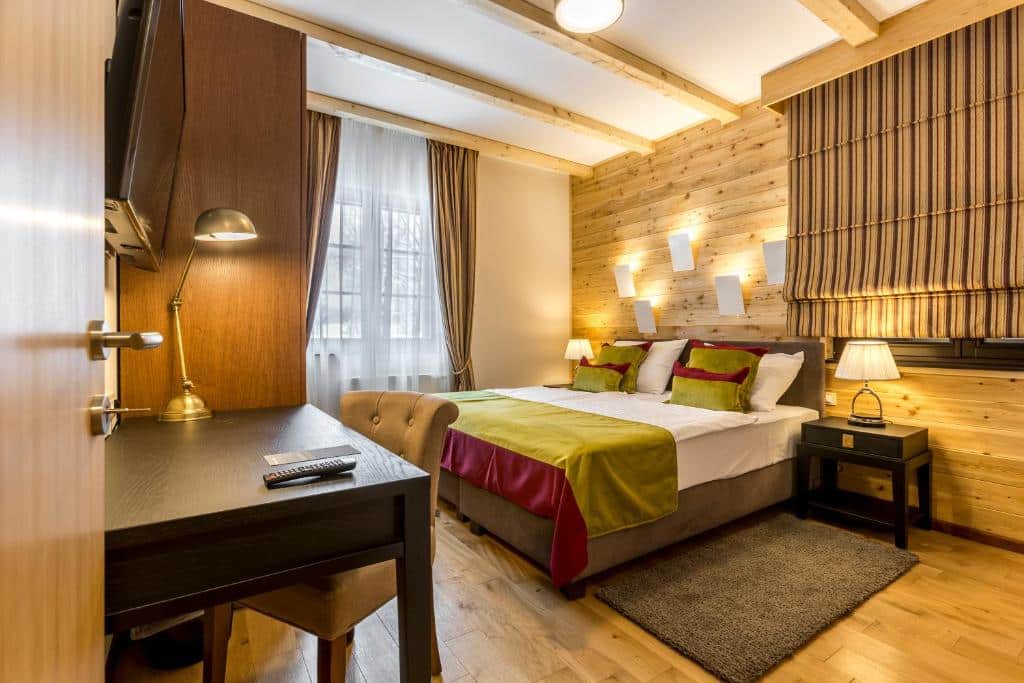
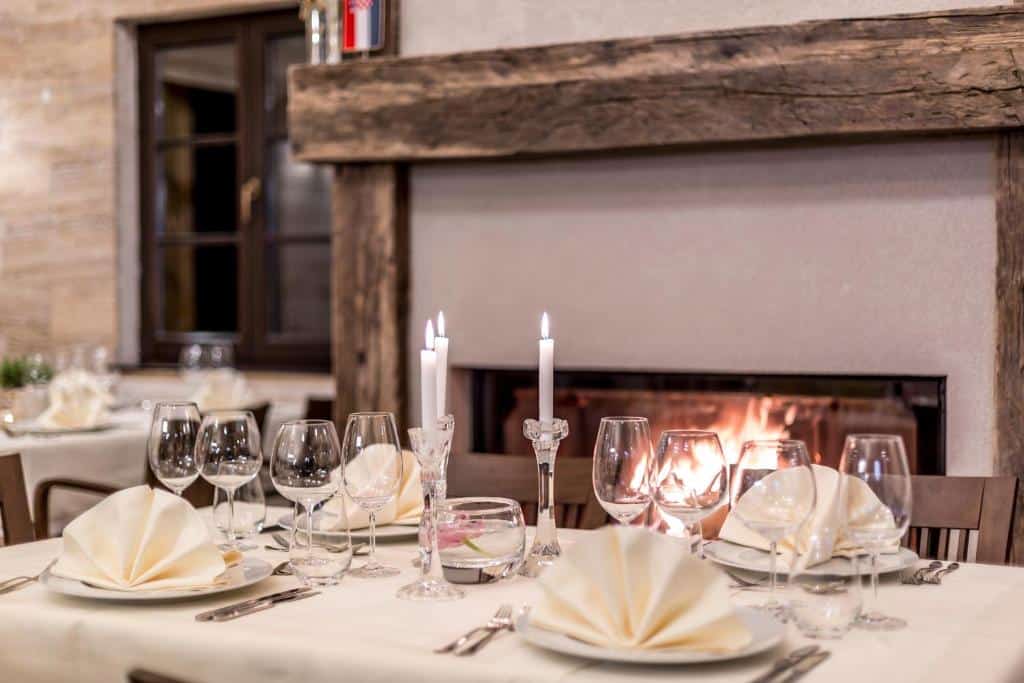
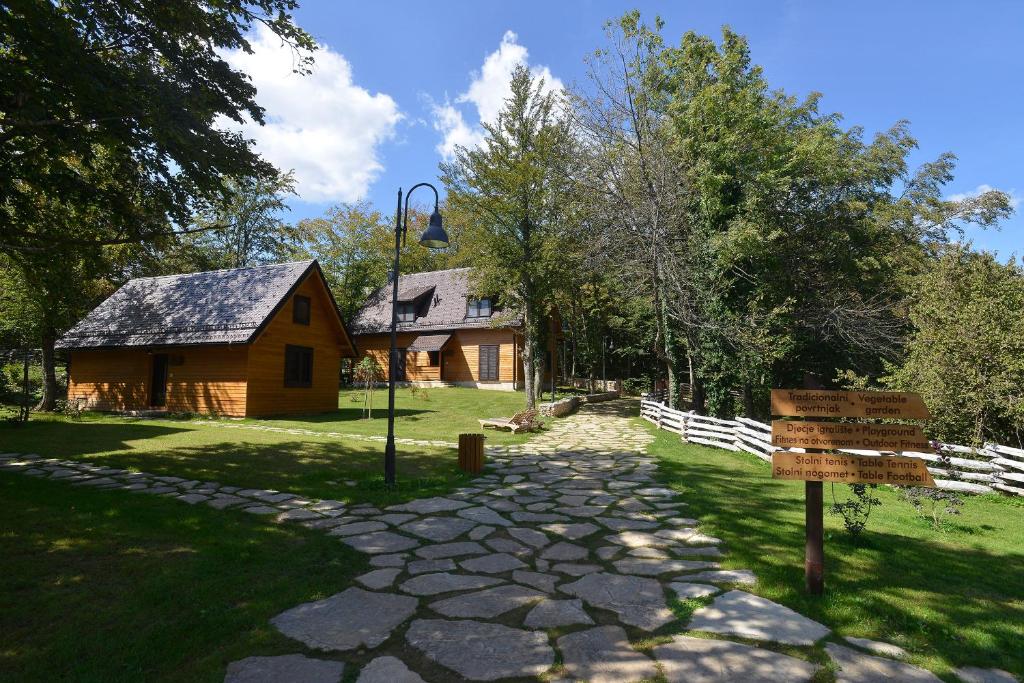
Fenomen Plitvice Resort is a highly rated resort situated within the natural surroundings near Plitvice Lakes National Park. Guests appreciate the resort’s peaceful forest setting and excellent location close enough to walk or take short transport into parts of the park while avoiding the busiest crowds. The property has spacious, well‑appointed rooms and cabins with modern comforts, including kitchenettes, flat‑screen TVs, and private bathrooms. On‑site amenities such as a restaurant with hearty meals and breakfast buffets, a wellness area with sauna and hot tub, and outdoor areas with playgrounds and games provide added convenience and relaxation after a day of hiking. Visitors consistently praise the attentive and friendly staff, clean and comfortable accommodations, and family‑friendly atmosphere.
How to get to the Plitvice Lakes
Plitvice Lakes National Park is located in central Croatia, about midway between Zagreb and the Dalmatian coast. There are several ways to reach the park depending on your starting point.
Car (most flexible)
Driving is the fastest and most flexible way to reach Plitvice Lakes.
- From Zagreb, it takes about 2–2.5 hours via the A1 and D1 roads.
- From Zadar, the drive is roughly 1.5–2 hours.
- From Split, it’s about 3.5–4 hours.
A car allows you to arrive early, explore multiple park entrances, and continue to other destinations nearby. Parking is available near the main entrances.
Bus
Regular buses connect major Croatian cities to Plitvice Lakes:
- Zagreb: there are daily buses to the park that take around 2.5–3 hours.
- Zadar or Rijeka: buses run less frequently but are still a convenient option.
Buses usually stop at towns near the park, such as Korenica, from where you can take a short local bus, taxi, or shuttle to the park entrance.
Guided tour
Many tour operators have full-day or multi-day tours to Plitvice Lakes from Zagreb, Zadar, or Split. This is a hassle-free option if you prefer not to drive, as tours usually include:
- Round-trip transportation
- Park entrance tickets
- A guided walk through the lakes and waterfalls
Train
There is no direct train to Plitvice Lakes. The nearest train stations are in Zagreb or Karlovac, followed by a bus or taxi ride to the park.
Tips for visiting
- Arrive early to avoid crowds, especially in summer.
- Bring a printed ticket or offline copy if buying online.
- Combine your visit with nearby towns for a longer road trip experience.
Best time to go
Plitvice Lakes National Park is a stunning destination all year round, but the experience varies with the seasons. Spring (April to June) brings powerful waterfalls, green forests, and blooming wildflowers. This time is ideal for photography and fewer crowds. Summer (July to August) has warm, sunny weather perfect for exploring all the park’s trails, though it is the busiest season and advance ticket booking is recommended.
In autumn (September to October), the lakes and forests are painted in vibrant reds, oranges, and golds, creating a peaceful and picturesque atmosphere. Winter (November to March) changes the park into a magical snowy landscape with frozen waterfalls and quiet paths. But some trails and services may be limited. For the best balance of mild weather and smaller crowds, late spring and early autumn are generally considered the ideal times to visit.

Highlights in Croatia
Croatia is a stunning destination that combines historic cities, beautiful islands, and breathtaking natural landscapes. In Split, visitors can explore the ancient Diocletian’s Palace, stroll along the lively Riva promenade, and hike up Marjan Hill for panoramic views of the city and the Adriatic Sea. Just a short drive away is the UNESCO-listed town of Trogir, with its cobblestone streets, medieval architecture, and charming waterfront cafés. Nearby Čiovo Island offers quiet beaches, scenic coves, and excellent opportunities for swimming and cycling.
Further south, Dubrovnik, the “Pearl of the Adriatic,” fascinates with its medieval city walls, the bustling Stradun, and historic landmarks such as Rector’s Palace and Dubrovnik Cathedral. Island-hopping from Split, Trogir, or Dubrovnik lets travellers discover gems like Hvar. This island is known for fragrant lavender fields. For nature lovers, Croatia’s beauty extends to Plitvice Lakes National Park and Krka National Park, where cascading waterfalls, emerald rivers, and green landscapes create unforgettable experiences.

